
This Vessel Holds Nothing
A Staircase to Nowhere with a View of the Abyss

“The Vessel gives nothing back to the city – it only extracts from it”
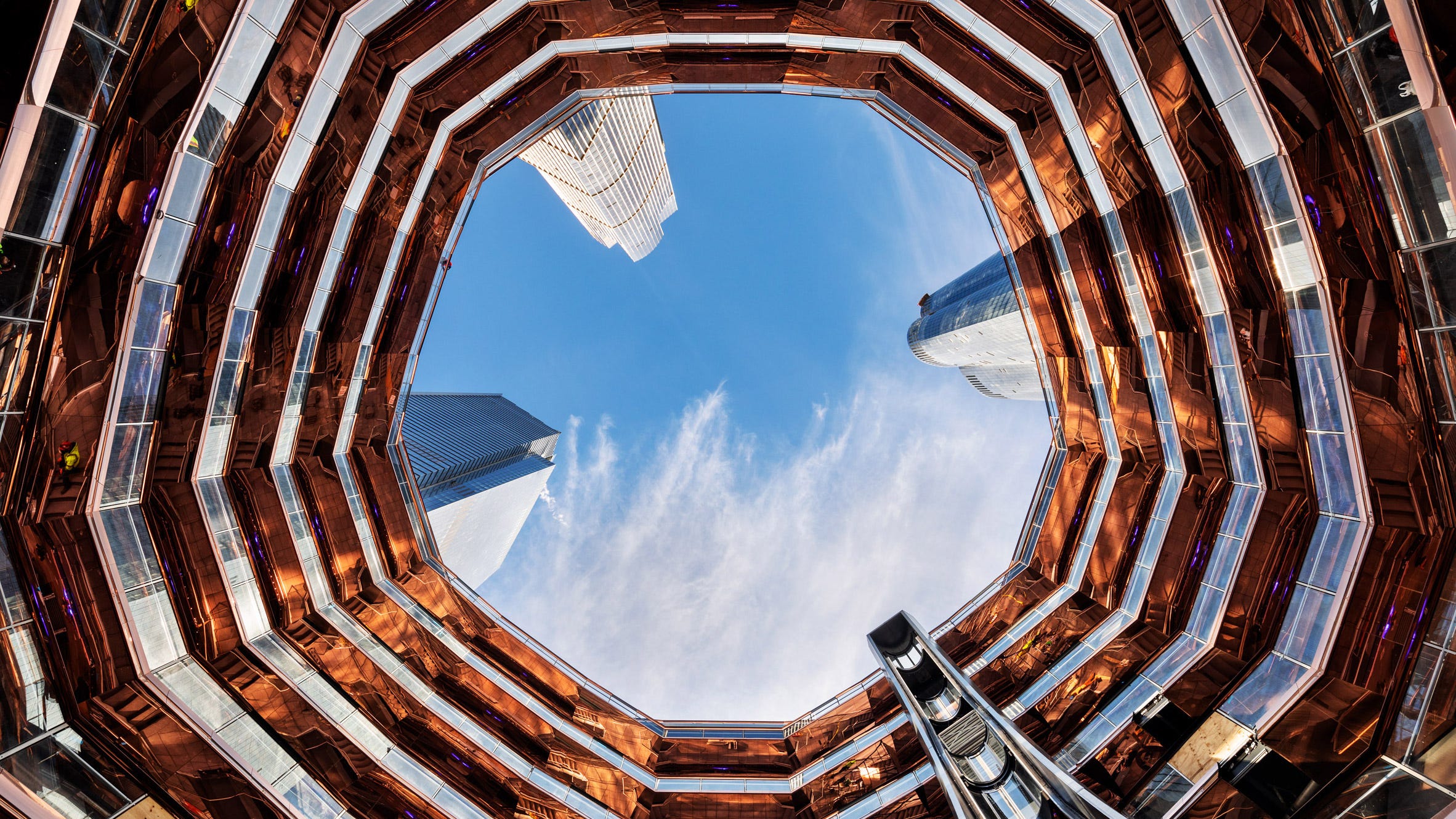
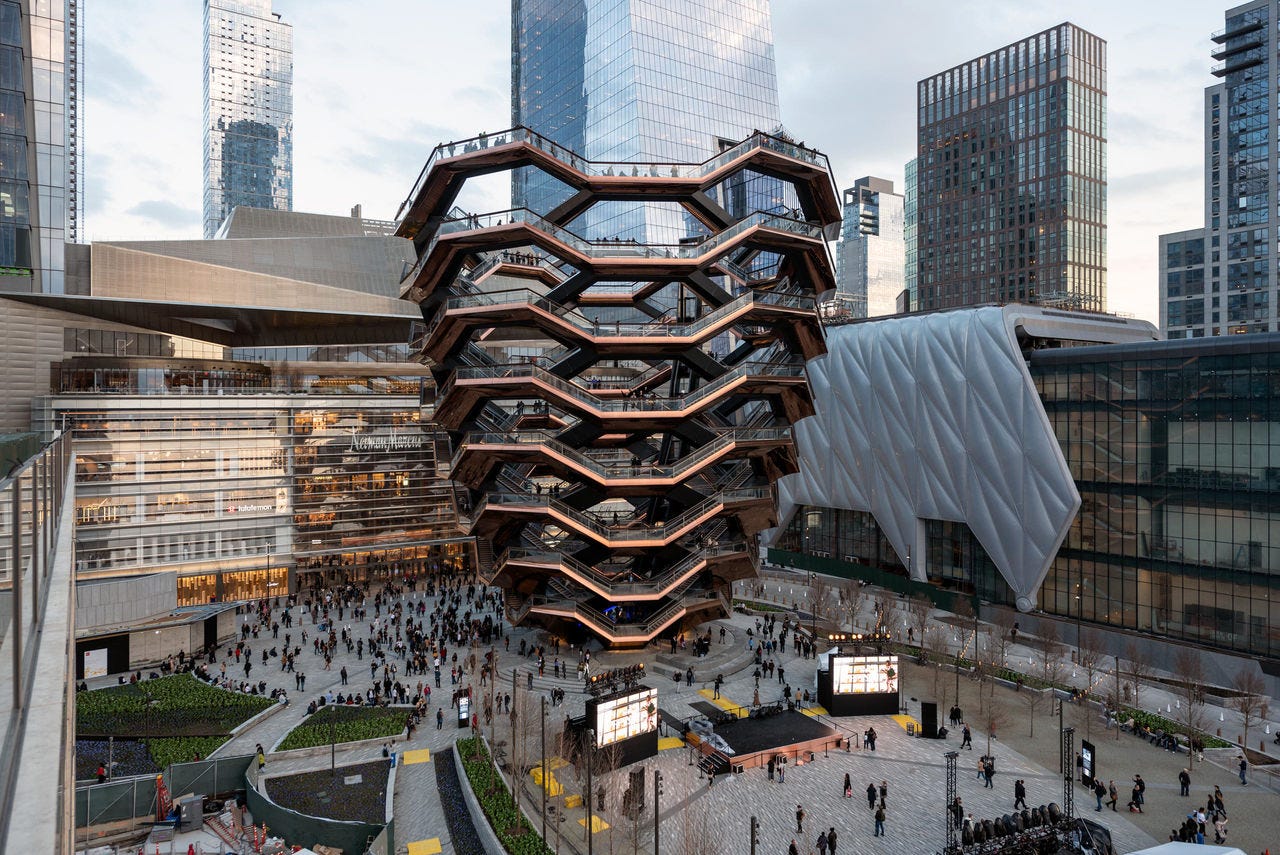
The Vessel is a monument constructed in Hudson Yards that opened in March 2019.
Unlike most monuments which often commemorate people or events, The Vessel has no real purpose. According to Heatherwick Studio, the design architect of the structure, the Vessel functions as a ‘public centerpiece for Hudson Yards.’1
The Vessel is not a traditional centerpiece. Most happen to be small, and placed upon a dining table. They are quite complicated and require a delicate design sensibility to produce. This is because centerpieces, are decorative, but functional. They occasionally holding candles, flowers, or fruits. They must be large enough to garner attention and generate a poetic affect but not be too large to distract from a dinner conversation.
The Vessel accomplishes none of the delicate tasks centerpieces normally do. It doesn’t contain an aromatic or light source. You can’t see over or around it. It makes no effort to support the social activities happening around it.
In fact, it does the contrary. It distracts. The Vessel is cladded in a bronzed colored steel, which contrasts strongly to the concrete and glass plinth that is Hudson Yards. It is impossible to ignore.
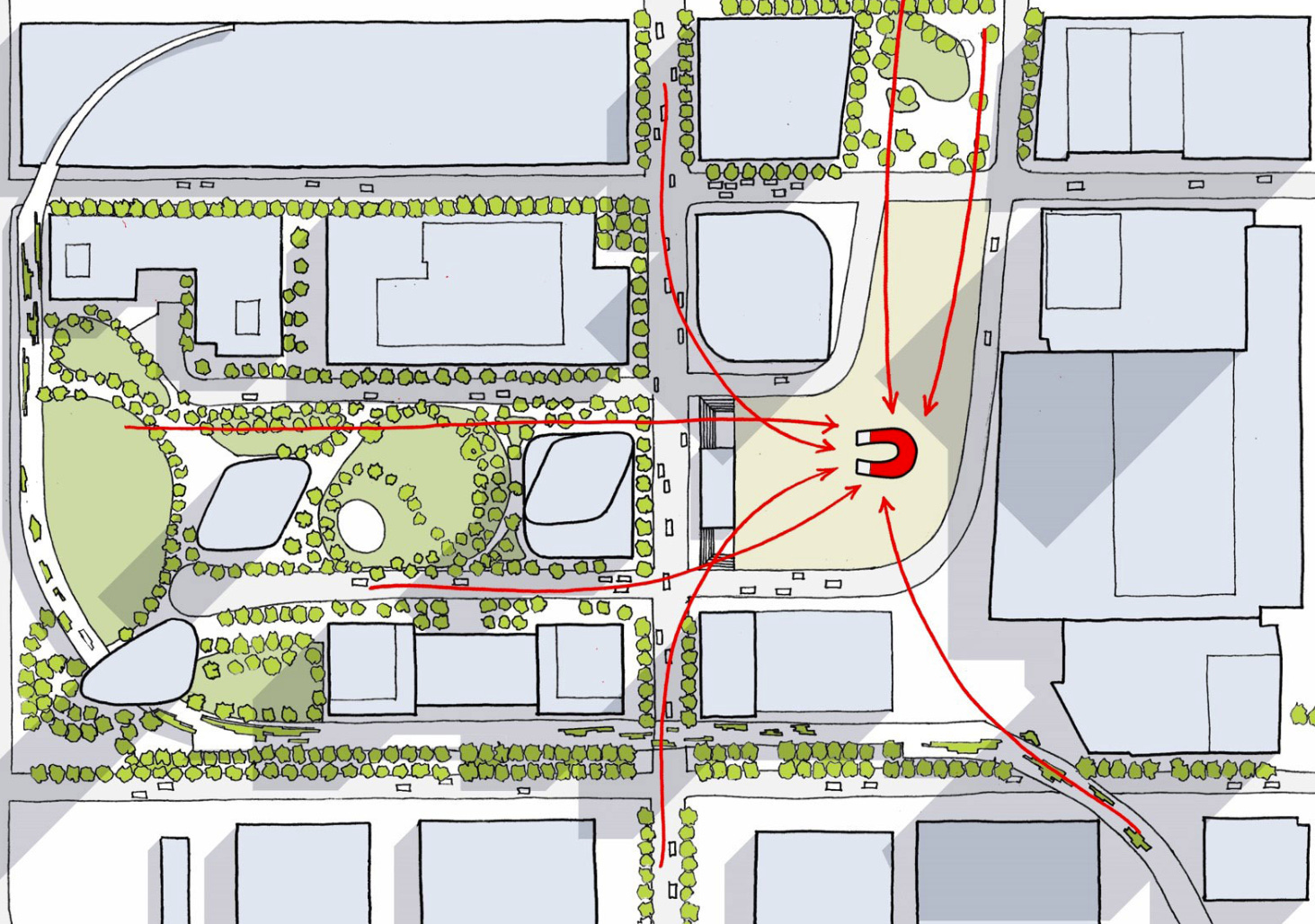
It implodes rather than explodes. Even the diagrams produced by Heatherwick Studio imagines it as a magnet, relentlessly attracting attention, akin to a cultural blackhole.
Furthermore, centerpieces are usually relatively inexpensive compared to the estimated 200 million dollar price tag of the Vessel.2
The project was destined to fail from conception but the lore of the Vessel got worse and worse after its construction.
Eleven months after the Vessel opened, a 19-year-old man tragically jumped from the sixth floor and died. Eleven months after that, a 24-year-old woman committed suicide in the same way. The structure temporarily closed after a third suicide, which occurred only twenty days after the second.
The developer behind the Vessel, Related Companies (very weird name for a company. I am guessing the choice is a weaponized SEO unoptimization scheme) reopened the Vessel just four months after the third suicide, without any new safety measures. There were discussions of adding netting or raising the current glass barriers, but those plans were abandoned. Instead, the developers reopened the structure with a ban on solo visitors; anyone wanting to climb the Vessel would have to do so with company. An anonymous source in Heatherwick’s office mentioned that higher handrails were designed, but unfortunately never implemented.
Despite these ‘efforts’, a fourth suicide occurred just two months after the reopen, resulting in the Vessel's closure for the next three years. In October 2024, the Vessel finally reopened with newly installed safety nets approved by Heatherwick Studio and Related Companies.
Why the hell did this happen? Why the Vessel?
It’s speculated that the architecture is partly to blame. The safety railings are only four feet tall (about waist height) and the geometry offers constant visual and physical access to a straight drop to the concrete below.
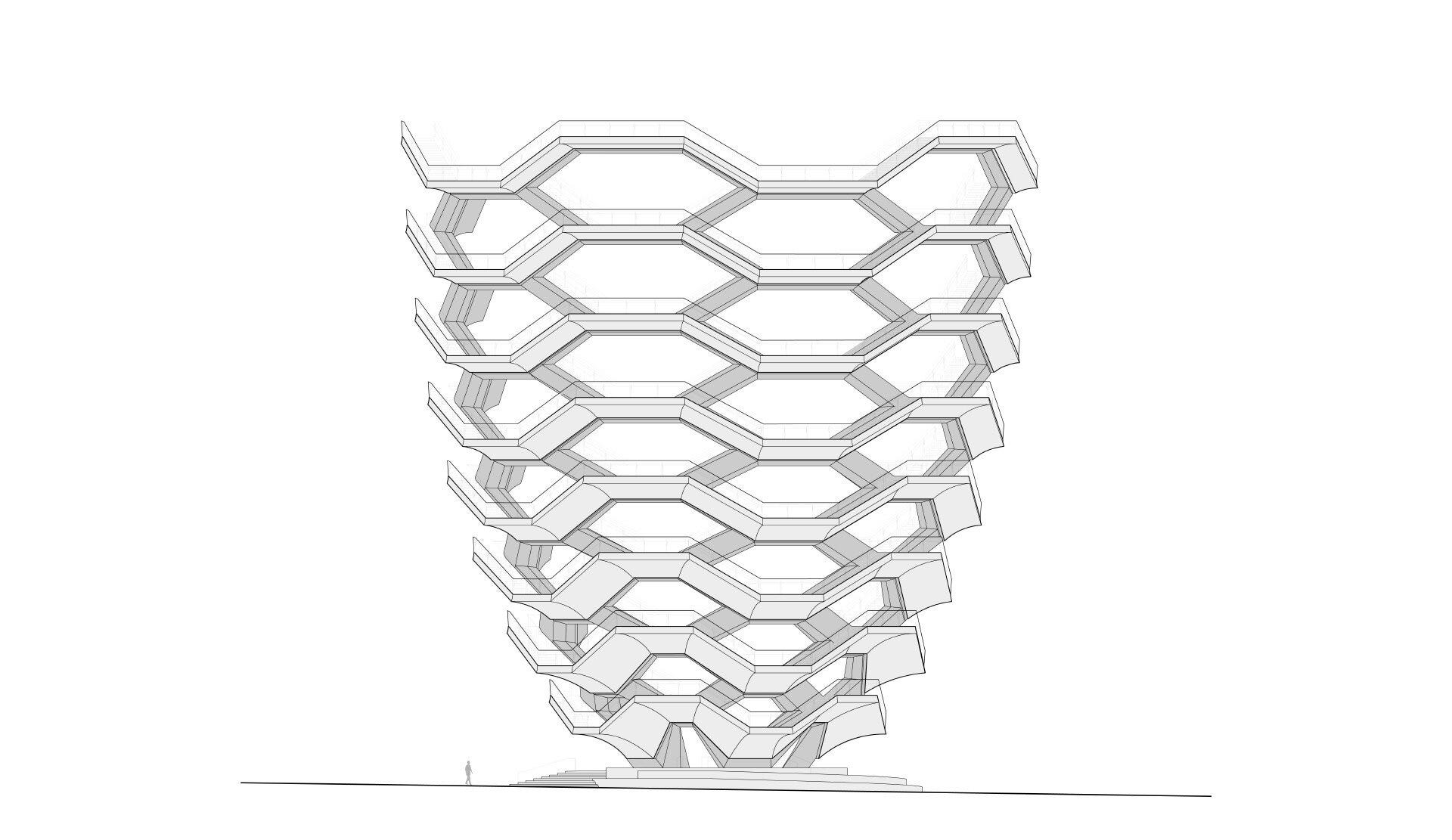
This was not an oversight; its openness was an intentional disregard of human safety in exchange for an idealistic fever dream where tragedies never occur.
More than just a design flaw, the Vessel had become a spectacle. Its cladded in a bronzed-toned steel and is situated in one of the most expensive and controversial developments in Manhattan. Its construction garnered immense media attention and tourist traffic. The visibility of the site likely generated symbolic potency for individuals seeking a dramatic exit.
In cases like this, the phenomenon known as the suicide contagion effect is especially relevant. Defined as “the process whereby one suicide or suicidal act within a school, community, or geographic area increases the likelihood that others will attempt or die by suicide,” the Vessel became an example of this terrifying concept.
Generally, The project’s design and its subsequent changes revealed the disgusting stubbornness of the architects and developers in prioritizing their own vision over human life.
Many people already know this part of the story. The suicides collected loads of media attention.
However, there is a second disturbing story about the Vessel that isn’t told as often. A story of the theft of public funds intended for those most in need.
In 2019, Kriston Capps reported that Hudson Yards and the Vessel siphoned hundreds of millions of dollars meant for underserved neighborhoods with high unemployment.
Yes, really…
The money came from the EB-5 Visa program where foreigners can essentially buy American visas by investing hundreds of thousands of dollars in American real-estate.
Those dollars are supposed to develop underserved areas with high unemployment, but the legislation which regulates this process is quite exploitable.
There were many neighborhoods in New York City that qualified for such investments, but boundaries used to define these neighborhoods were strategically gerrymandered to include Hudson Yards as an area of high unemployment.
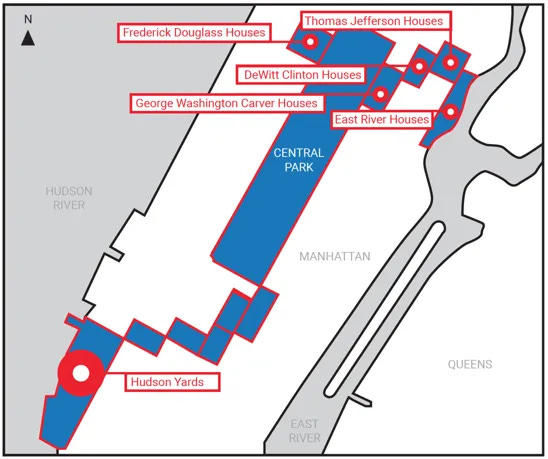
Absolutely deplorable..
So if you are looking for a quote to restack, Here you go ;)
The Vessel in Hudson Yards is the result of a reverse Robin-hooding scheme, in which funds were stolen from marginalized communities to produce the ugly fever dream of a billionaire which resulted in a preventable sequence of deaths.
I am frustrated that this story doesn’t get the media attention that the suicides garnered. I understand the mechanisms why but this knowledge doesn’t make the facts any less enraging.
The reason why this reverse Robin-hooding scheme didn’t get the attention it deserved is because the human brain struggles to understand what our friend Freddy Engels called “Social Murder”.
“When one individual inflicts bodily injury upon another such that death results, we call the deed manslaughter; when the assailant knew in advance that the injury would be fatal, we call his deed murder. But when society places hundreds of proletarians in such a position that they inevitably meet a too early and an unnatural death, [...] knows that these thousands of victims must perish, and yet permits these conditions to remain, its deed is murder just as surely as the deed of the single individual; disguised, malicious murder, murder against which none can defend himself, which does not seem what it is, because no man sees the murderer, because the death of the victim seems a natural one, since the offence is more one of omission than of commission. But murder it remains.”3
Was life lost in Harlem due to this mis-use of funds? If not now, then certainly in the future. These types of investments, when implemented properly, do save lives or at least extend them (Is there much of a difference?).
These suicides may have been social murders as well, but they occur in quick events with plenty of horrified bystanders.
The effects of the misappropriation of funds is harder to click-bait and thus, doesn’t get the attention it deserves.
A parallel occurrence brought to light the exploitation of the health insurance field.
Someone killed UnitedHealth Group CEO Brian Thompson, and whoever did it seemed to understand that the health insurance industry is responsible for thousands of social murders each year. Yet the moment a CEO linked to this systemic harm was shot, the media paid far more attention to his death than to the suffering his company inflicted on countless others.
It is vital that we combat this quiet tragedy of social murder.
I believe the best bet we have without killing CEOs is to continue discussing it and to use proper Russell Conjugation. That is, using words with appropriate emotional connotations.
Instead of saying “funds were redirected”, say “funds were siphoned from the poor.”
Instead of “a tragic pattern of incidents”, say “a preventable sequence of deaths.”
Instead of saying “Architect was firm”, say “He was pig-headed.”
Words matter. Language softens injustice. If we want change, we must call things by their rightful names.
Thank you for reading. Please share if you feel inclined. I feel this topic is very important and not widely known.
https://heatherwick.com/project/vessel/
https://fortune.com/2016/09/14/stephen-ross-eiffel-tower-hudson-yards/
Engels, Friedrich (2009) [1845]. The Condition of the Working Class in England. Cosimo, Inc. p. 95. ISBN 978-1-60520-368-3.
Thank you for this, I agree with you that words matter, but also, architecture matters.
The vessel was designed as an act of hubris, too many architects are guilty of this, with no regard for what kind of impact their very public "works of art" (I use the term loosely) will have on the public.
The Vessel is vacuous and ugly, both those things have an impact on the human psyche. No wonder it became a suicide hub.
The money grift is not the least bit surprising.
We desperately need to stop feeding the egos of architects and return to building with harmony, balance and beauty in mind. A comment that I'm sure will bring about a great deal of "eye rolling" from the architecture community.
"Words matter. Language softens injustice. If we want change, we must call things by their rightful names."
"The misuse of language instills evil in the soul." - Socrates
Thank you, David, for writing this piece. You show a high moral standard that must be shared by everyone.
I often wonder how something like that structure could get built in the first place. It is not enough to say it is the responsiibility of the architects and owners, or even the city that would allw it, but why is it there in the first place? What is it for? In the end, the People are responsible for everything. Our level of consciousness, or, as in this case, our UNconsciousness, is always the cause.