
Poetic Efficiency

This Substack is by David Perrine. I write about architecture, aesthetics, design theory, and philosophy. If you enjoy my work, please consider subscribing.
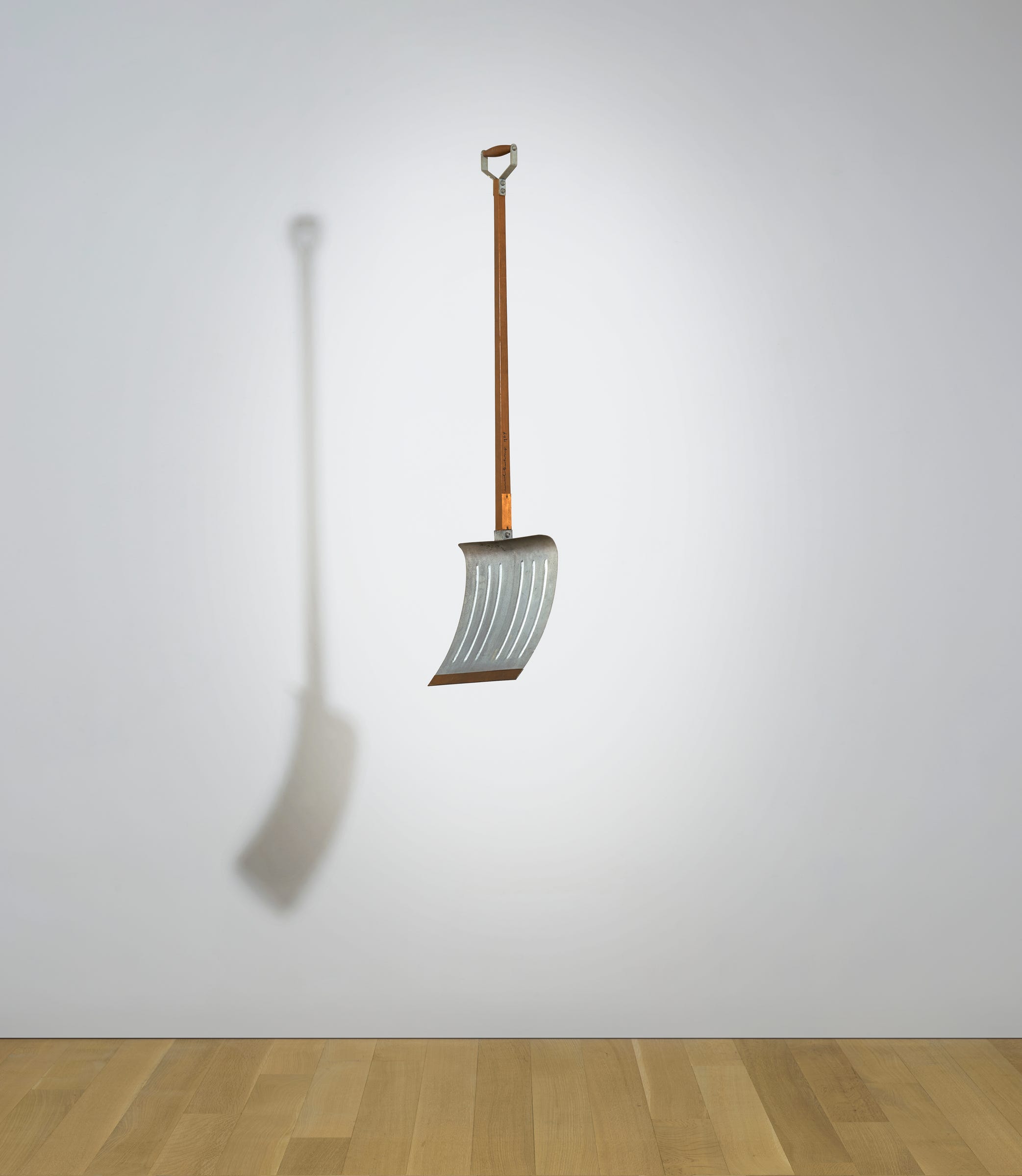
“Unlike other works of fine art, works of architecture are very seldom constructed for purely aesthetic purposes: instead, these are subordinated to other, practical purposes that are foreign to art itself, and so the great merit of the architect consists in carrying through the purely aesthetic goals in spite of their subordination to foreign ones, and achieving them by skillfully adapting them in a variety of different ways to each of the arbitrary goals, and judging correctly which aesthetic-architectonic beauty would suit and be joined to a temple, which to a palace, which to an armory, etc. The more a harsh climate steps up the demands of necessity, of practicality, determining them more tightly and prescribing them more imperatively, the less room there is for beauty in architecture”
- Schopenhauer, A. (1969). The World as Will and Representation (Vol. 1). Dover Publications.
This quote sits on the inside cover of my graduate school portfolio. It captures what I believed to be the essence of successful architecture: Elegantly reconciling (as opposed to compromising) the various parameters and problems architects are confronted with.
This thesis is still present today and is often paraphrased by contemporary architects and theorists. Picon and Schumacher come to mind.
These claims contrast interestingly with an antithetical comment made by Paul Rudolph in Perspecta 7 when discussing Mies.1 Rudolph commented that Mies’s work has a potency because it ignores many aspects of architecture, suggesting that the potency of an architecture can come from the ignorance of parameters as opposed to a building’s conformity to them. It was too difficult for Mies to produce holistic and affordable architecture while conforming to the new requirements of modernist architecture. Problems needed to be ignored in favor of abstract concepts.
Schopenhauer claim returned with a fervor in the late 90s during the proliferation of computing within the discipline. With more information, parameters, processing, and bits, could architecture become more complete, artistic, and bespoke while remaining economical. Along with his claim was the promise of an increasing scale of bespoke design. Architects could theoretically manage massive and unique projects using parametric or computational organization.
Large architectural projects and even urban planning schemes became more bespoke and asymmetrical. Before the digital turn, the scale of urban planning often encouraged systems based on repetition: grids, blocks, modules, and other forms of organizational regularity. Computation promised that projects could operate at a similarly immense scale while allowing each part to respond differently to its particular conditions. I am reminded of Greg Lynn channeling William Bateson in his Ted Lecture where he noted that Asymmetry in a system comes from the integration of new information causing the biaxial differentiation. It then follows that the removal of information causes a formal return to symmetry.
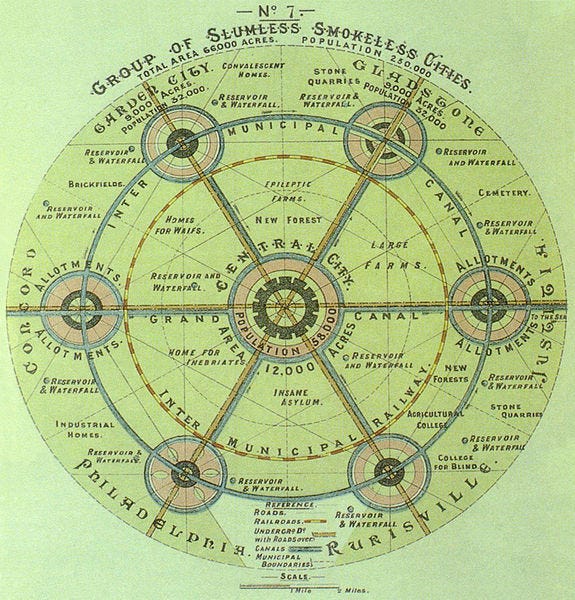
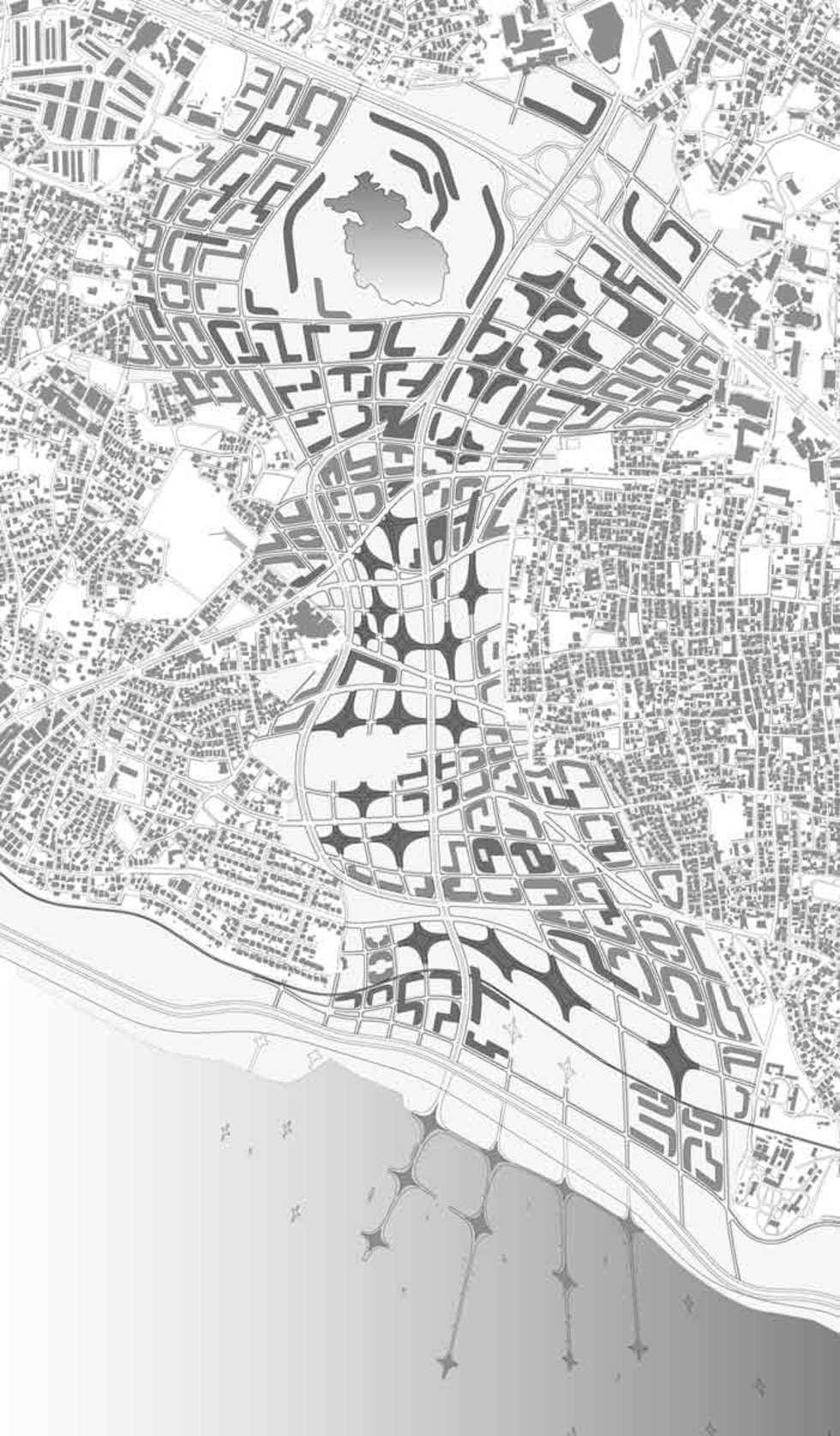
In today’s architectural milieu, there is plenty of information and computing power. Yet, there is an inability to act on such data and processing capability due to limited resources and changing design culture. As a result, Designers cannot simply react to every available parameter and make appropriate bespoke design decisions. Instead, they must react to their economic conditions and choose which parameters to interrogate and which to ignore. Just as Rudolph pointed out Mies’s ignored problems, designers are forced into this condition Mies choose to exist in.
This transition from a potency through computational integration of data to a potency through limitation is most clear in the recent history of Upenn’s M.Arch program. A slow displacement has been taking place ever since the new Chair took charge in 2024. Since then, the digitally-focused faculty have either left the school, or have been severely muted. Take Barry Wark’s studio progression as an example.
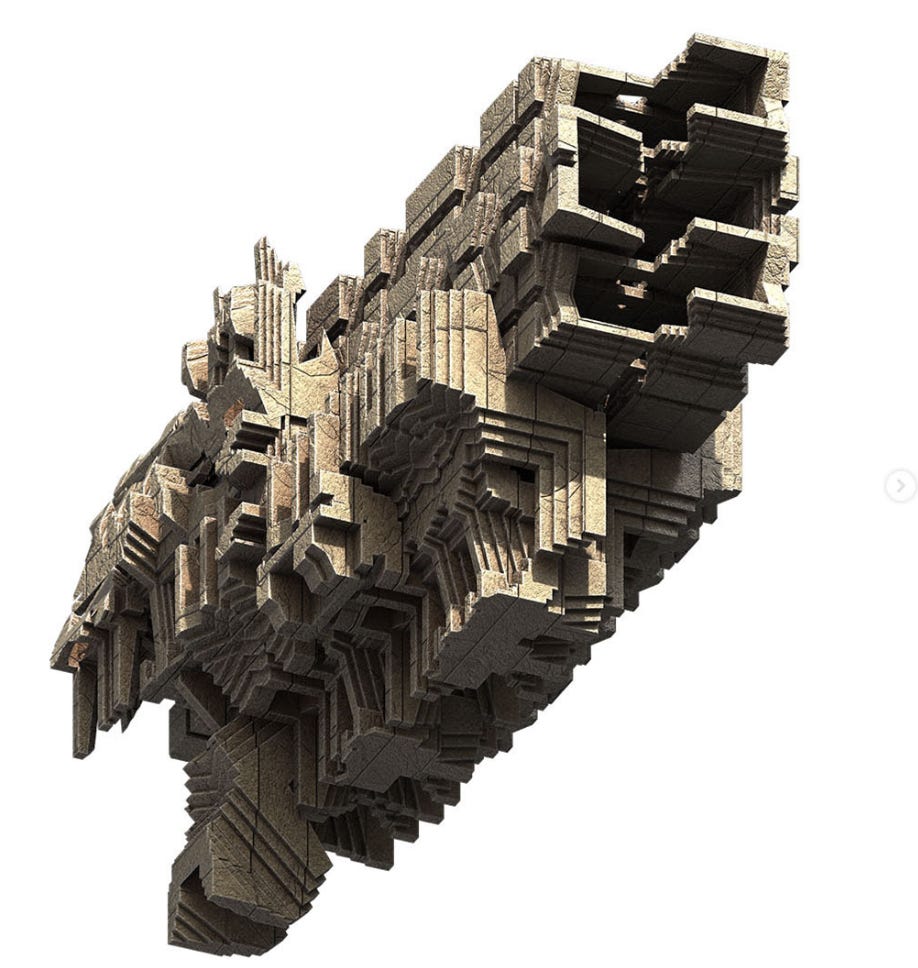
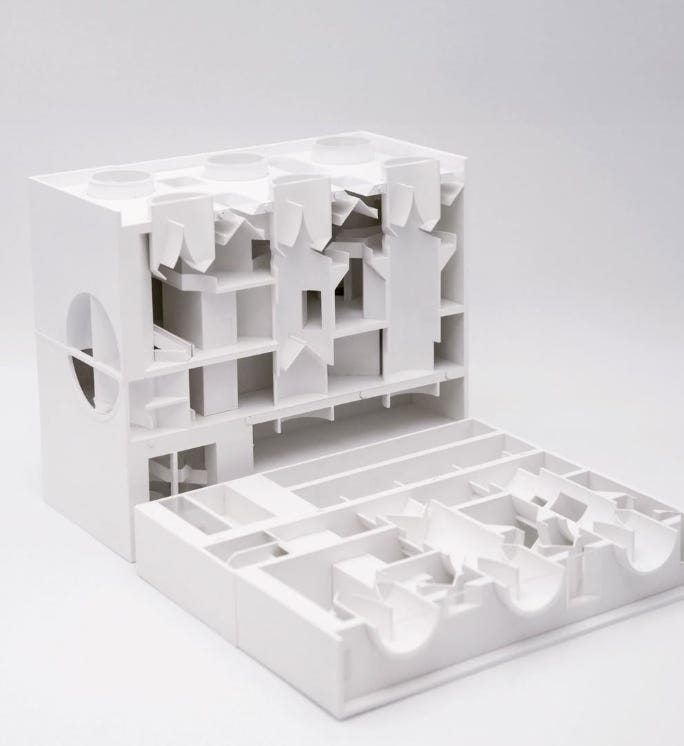
Earlier this year, Nate Hume gave a lecture at SCI_Arc entitled “How Soon is Now”. There, he pointed out that architects used to be optimistic about their ability to make global change because it was common for young designers to be given such opportunities and funding. Today, at least in the US, such opportunities have vanished for unestablished architects and thus, we are forced to turn towards smaller projects with more modest budgets, where poetics must be achieved not through scale, and complexity, but through milking the most out of the few small opportunities we have been given. The trend towards restraint is more of an economic and cultural condition as opposed to a natural shift in aesthetic trends.
Thus, in my recent interactions with the world, I have kept this concept of Poetic Efficiency at top of mind. that is: the production of disproportionate aesthetic potency through limited means. This concept is vital in the discipline of architecture due to economic constraints. Every project goes over-budget so contemplating ways to produce disproportionately large aesthetic effects is vital. This can come from places outside of architecture, and I believe it is worthwhile to point it out wherever it is observed. Thus I have decided to provide a list documenting the phenomena. I hope this list is eye opening and encourages you to look for moments of aesthetic expression in your day to day, as being open to such things makes life worth living.
- David 🦆
Modal Jazz
BeBop is structured around improvisation and often has complex harmonic structures requiring the improviser to jump between various harmonic modes. Modal jazz flattens this structure, which at first seems to remove much of BeBops potency. Instead, Modal Jazz provides a more freeing landscape for the improviser, allowing individual ideas to be expanded on.
Microtonal Harmony
Traditional western music uses a 12-tone subdivision per octave and playing notes between this is often easy to achieve on certain instruments and provides sounds completely foreign to most listeners. For bassists and guitarists, simply using zipties and temporary frets unlocks entirely new harmonic systems. Jacob Collier is known to use such harmonic systems to great effect. More recently, artists like Angine de Poitrine use such harmonic techniques to produce uncanny or uneasy melodies.
Rothko
Mark Rothko’s paintings are composed from an extremely restricted formal vocabulary. The rich effect of his work comes from the mixing of pigments and the contrast of 2-3 tones. This process can be quite inexpensive to mimic. There is little conventional imagery to interpret and almost no compositional complexity in the traditional sense, yet the result is sublime enough to be plausibly used as an altar in religious spaces.
Tangency
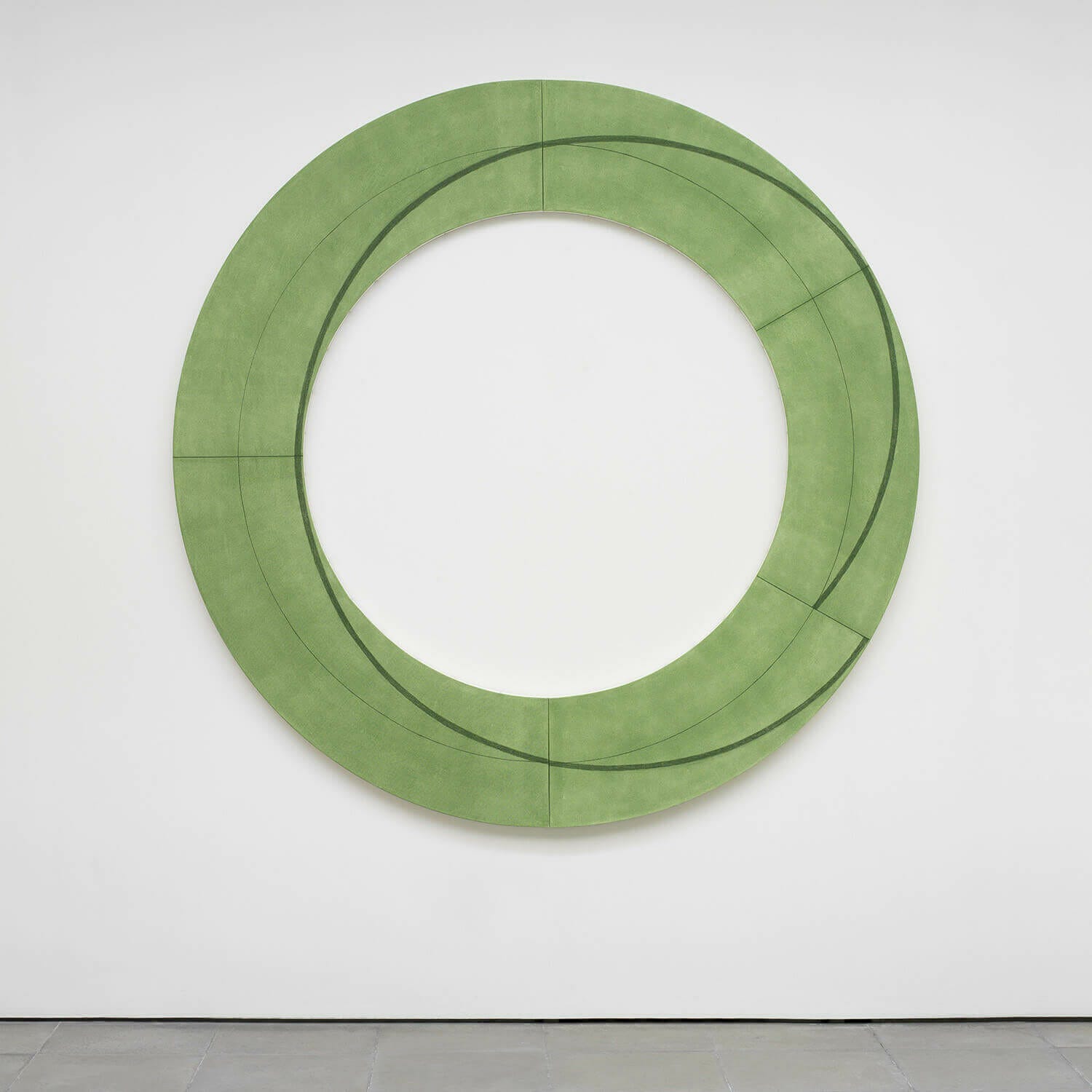
Tangencies in visual media depict a soft contact, sometimes called a ‘kiss’ in architecture and has become an obsession to many designers. The work of Ellsworth Kelly and Robert Mangold have been influential to designers today, including Sean Canty, Zaha, Preston Scott Cohen, Cameron Wu, Jeanne Gang, and others. The gentle touching of two masses in architecture is surprising and thus potent due to the heavy nature of the practice and the rarity of curvature in the built world.
Go/Baduk/Weiqi
Go is played with a gridded board and two kinds of stones. Unlike chess pieces, each stone is identical and has no specialized ability. Once placed, it does not move. The rules can be learned quickly, yet the game produces an inexhaustible field of strategic and more importantly, formal possibilities. Often correct moves are beautiful because the game is spatial and each piece has equal strength, mathematically correct play often is compositionally harmonious as well.
Go complicates a simple definition of poetic efficiency as “doing more with less.” Its richness does not come from compressing several functions into one object. The board and rules establish conditions under which complexity can continually be produced by the players. The system is simple, but what occurs within it is not. For about a year, my computer wallpaper was a famous game-state from an old game between masters.
Also, the materials needed to play go are incredibly cheap.
Sol LeWitt’s Wall Drawings
Sol LeWitt’s wall drawings relocate much of the artwork from the finished object to the instructions used to produce it. A relatively short verbal statement can generate an elaborate drawing at different scales, on different walls, and through the labor of different people. The artist does not need to determine or execute every line individually. Thus, the artwork is easy to move around and install across galleries around the world. It is also changeable and each iteration of each such piece is fresh.
Musical Breaks
A break interrupts the continuity of a song by temporarily removing its melody, vocals, accompaniment, or rhythmic density. The remaining element, if any, gains an intensity it did not possess while surrounded by the full arrangement. When the absent elements return, they also feel more powerful because the break has renewed the listener’s awareness of them.
The break produces potency through the removal of context. Nothing new necessarily needs to be introduced. The same material becomes more forceful because its continuity has been interrupted.
The Construction Aesthetic
Buildings are assembled from materials that wrinkle, overlap, sag, split, fasten, and tolerate one another imperfectly. Conventional construction attempts to conceal this process. The construction aesthetic instead allows joints, screws, seams, patches, and dimensional irregularities to participate in the building’s visual character. The expression becomes a product of the fabrication process and aging. The typical resources used for concealment can be used elsewhere.
Note that I am not referring to Mies’s use of structural elements on building facades, as this was often ornamental with little structural utility. The construction aesthetic refers to the honest use of fabrication as an aesthetic language.

Drawing as Opposed to Building
This technique has been used by young designers to who may have not have the opportunity or means to produce works of architecture, but still need to build a portfolio. Many architects judge their peers based on what they have built. But what if designers don’t have the means to build? How are they to build a portfolio?
Drawing is perhaps the cheapest way to communicate architectural ideas and is thus materially efficient. A simple parti can suggest an architectural effect that would require enormous resources to realize materially. This makes drawing poetically efficient, but also introduces a caveat. Its potency may depend on avoiding the very parameters architecture is normally required to reconcile as pointed out by Phillip Johnson is his essay, “Seven Crutches of Modern Architecture”.
Although drawing isn’t the same as architecture, it can function as autonomous sites of architectural thought, allowing an architect to investigate spatial and formal ideas even when no commission exists to support their construction.
Haiku Poems
Seventeen small sounds
Hold a landscape between them
More than what is said.
Pareidolia
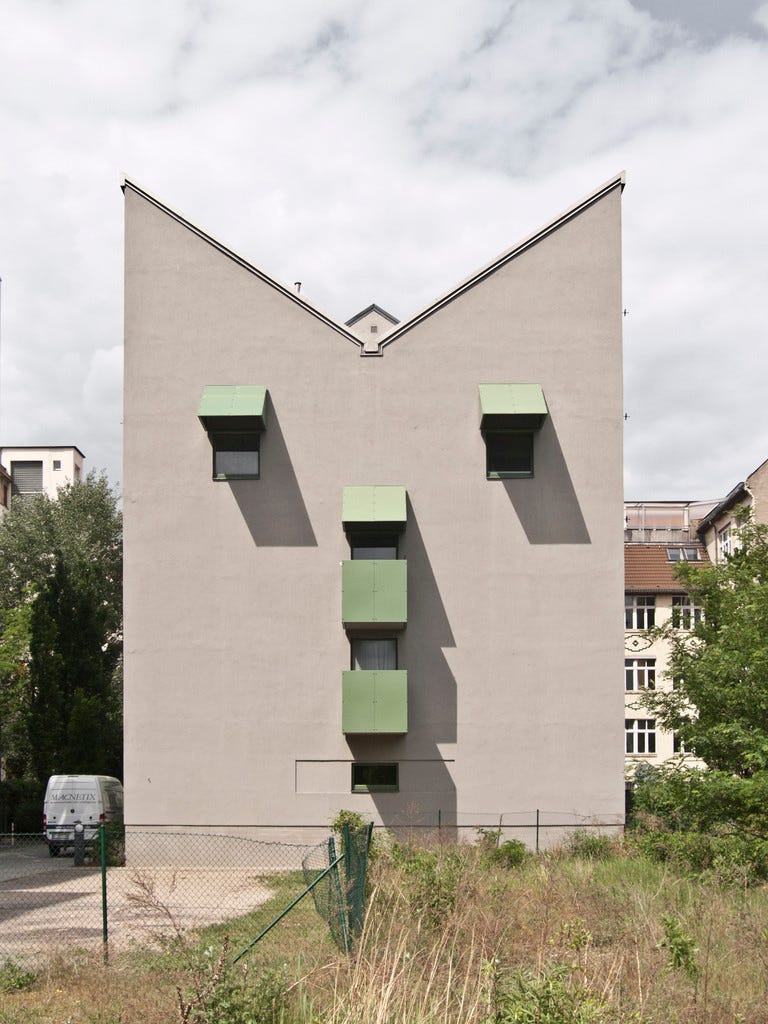
Pareidolia is the tendency to perceive familiar human patterns (especially faces) in unrelated visual information. A few openings on a building façade can become a friendly face, inviting visitors.
John Hejduk utilized this in his Berlin housing project. Buildings that engage in this effect often develop meaning within its community because it becomes relatable to its users. It doesn’t take many elements to induce such a strong effect, resulting in buildings appearing, angry, happy, cute, or any other human emotion.
Defamiliarization
Defamiliarization is an artistic and literary technique that presents objects or ideas in unfamiliar ways. Marcel Duchamp’s ready-mades produce art through a process of defamiliarization rather than conventional production. An existing manufactured object is removed from its traditional setting and placed in a gallery. This new context encourages viewers to reinterpret their understanding of the object. This process is materially inexpensive and has still managed to cause quite the stir in the art world.
Sampling
Sampling takes an existing fragment of music, image, language, or film and inserts it into a new work. The fragment carries formal, and cultural qualities into a new setting where it is recontextualized.
Sampling is quite easy to do today with contemporary musical production technology and can evoke strong memories in listeners. When done well, very little editing of the sample is needed.
Moiré Effect
A moiré pattern appears when two repetitive grids, lines, or screens overlap at slightly different angles producing an interference pattern. The effect is a wonderful example of phrase “the whole is greater than the sum of its parts”
This is poetic efficiency through relation. Two relatively simple systems produce a third visual phenomenon without that phenomenon being drawn directly. A slight displacement creates an effect at a scale much larger than the displacement itself. Often, movement is incorporated to produce moving images out of a set of static patterns.
Breaks from Repetition
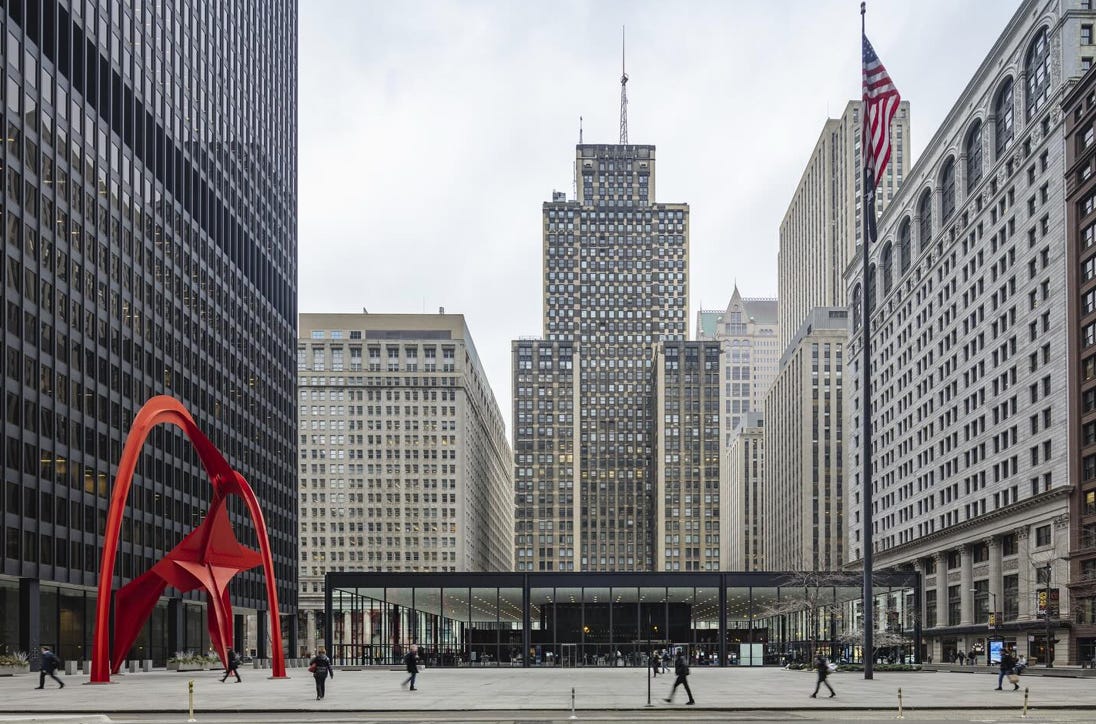
Repetition establishes expectation. Once a pattern becomes familiar, a small deviation acquires disproportionate importance. My favorite example of this comes from my morning commutes to the office where I walk by Mies van der Rohe’s Federal Plaza. There, you see a Miesian Plaza, dripping with order from it’s rigorous conformity to the grid. There, Calder’s Flamingo statue feels more powerful, almost as a revolt against the rigidity of the plaza. Without the grid, the statue would be far less potent.
Psychedelic Drugs
A minute amount of a chemical substance can alter perception, mood, attention, memory, pain, or consciousness profoundly. The disproportion between the physical scale of the dose and the intensity of the experience presents an excellent case study in efficiency despite its obvious drawbacks.
Lettered Baby Labubus
The alphabet-themed Labubus from Pop Mart’s Pin for Love series was a huge hit. Partially due to the already strong demand for Labubus, but also due to the introduction of lettering. In this set. Labubus were branded with one of the twenty-six letters. This small edition gave people more of a reason to buy, as they were looking for Labubus that had letters that matched their initials.
Negative Space
Negative space is the area surrounding or enclosed by a figure. Although it is often treated as background, careful composition can make that emptiness equally active. I often get comments on my portfolio about my use of white space. A while back, I was told the composition was ‘a breath of fresh air’. More recently, my supervisor told me she loves the way each image is given room to breath. The only thing I did was reduce the number of images on each page and the effect was obvious and potent.
The Period “.” When Texting
Periods are not needed in texting. Often, the ‘send’ button is used to separate ideas. Thus, the period is redundant and the use of such redundant tone feels harsh. It is a single dot and it can severely change the meaning of a message intentionally or not.
Cat’s Cradle
Cat’s cradle begins with a single loop of string. Through a sequence of transfers between fingers, the same continuous line becomes a series of different figures. The game is popular among children because the materials are accessible and there is a huge range of formal possibilities.
Patina
The color of Patina can be absolutely gorgeous and it requires no effort on the part of the fabricator. Additionally, it allows time and use to become visible. Patina is poetically efficient because history is stored materially. The object does not need an inscription explaining what happened to it; its transformations provide evidence.
Architectural Ruins and Degradation
I have trouble describing such phenomena, but I learned of the effect of degradation when visiting Athens, Greece. Conventionally, architecture is judged by its ability to resist obsolescence and structural collapse. In Athens however, the most interesting examples of architecture no-longer function as buildings and have collapsed multiple times. Preservation efforts are not attempting to rebuild what was, but to preserve the current state of the ruins.
Kuleshov Effect
The Kuleshov effect demonstrates that the meaning of an image does not reside entirely within the image itself. In Lev Kuleshov’s famous experiment, the same expressionless shot of an actor was placed beside different images, such as food, a child, or a body. Viewers interpreted the actor’s unchanged expression differently depending on the shot that followed it, perceiving hunger, affection, or grief where no corresponding performance had actually occurred. Thus, emotion can be communicated without any facial labor by the actor. Only the showing of various contexts is needed to communicate emotion.
Thank you for reading.
https://architecture-history.org/library/AJ/Paul%20Rudolph.%20For%20Perspecta.pdf
Page 51
Fascinating. It strikes me that what you call "parameters" in architecture corresponds to genre in literature. When novelists or poets opt to write within this or that genre, they are opting to conform to conventions without which the very idea of genre cannot exist. Want to compose an epic poem? At one time, your meter had to be dactylic hexameter. No choice in the matter. The implications for creativity and originality are far-reaching. One implication, it seems to me, has to do with audience. Only an audience knowledgeable about those generic conventions can assess the work, i.e., can identify its aesthetic value. To a neophyte, Vergil's poetry looks like mere pastiche or even plagiarism of Homer. Only someone "in on" what's really at work will be able to identify the manifold variations, apparently subtle but in fact cumulatively immense. Probably that's why we have so few geniuses: it's the rare person who can both produce a work of genius and teach the audience to recognize it.
Wow