
I Made a Chair
Notes on its Origin and Process

Hi Everyone,
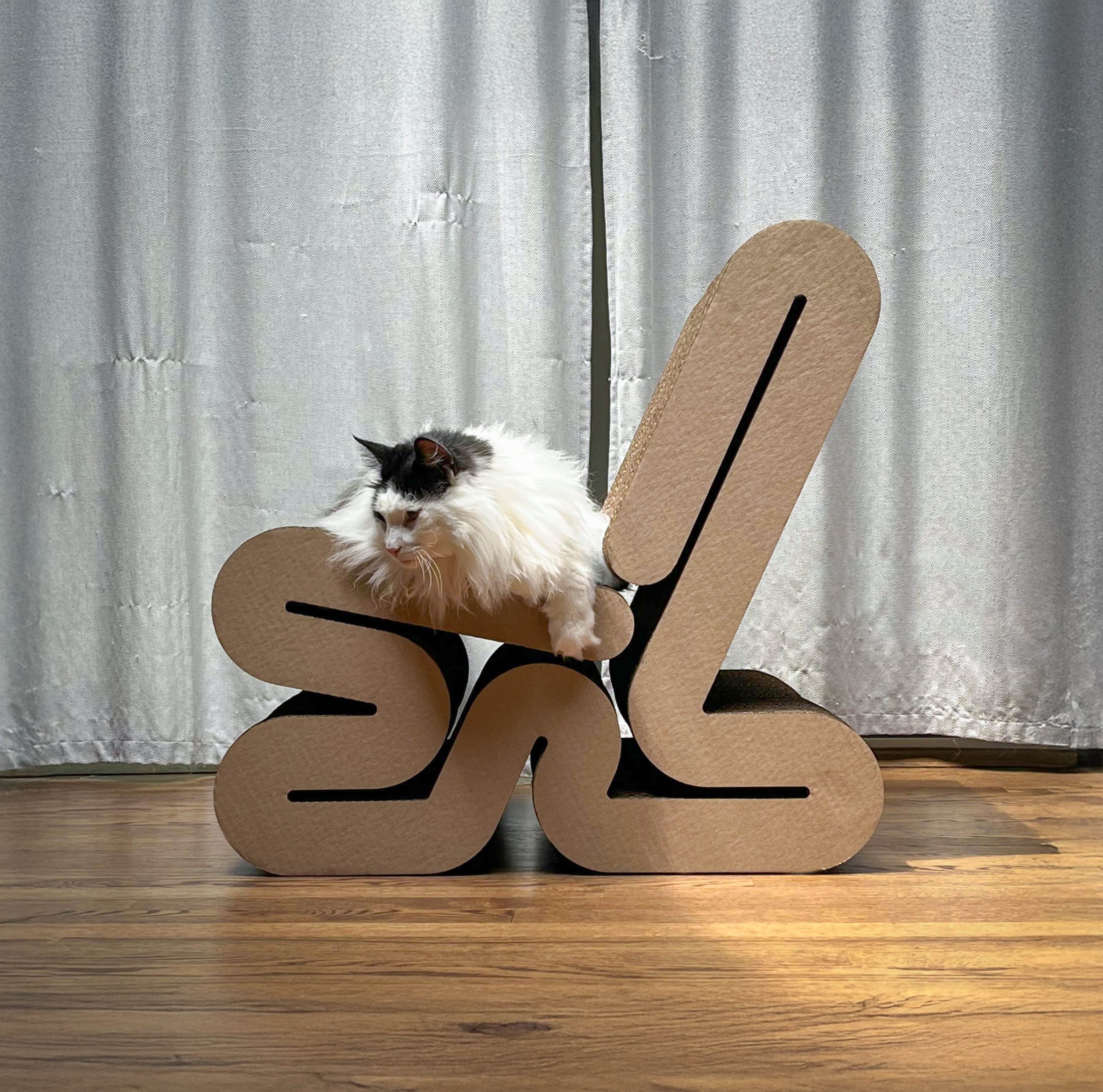
I made a chair. Below are my thoughts on it.
Thank you for opening, and I hope you enjoy.
Guest Editor: Kimberly Rooney 高小荣
My first impulse to create a chair came from a visit to the Philadelphia Museum of Art where I came across Frank Gehry’s rocking chair designed for his “Easy Edges” Series.
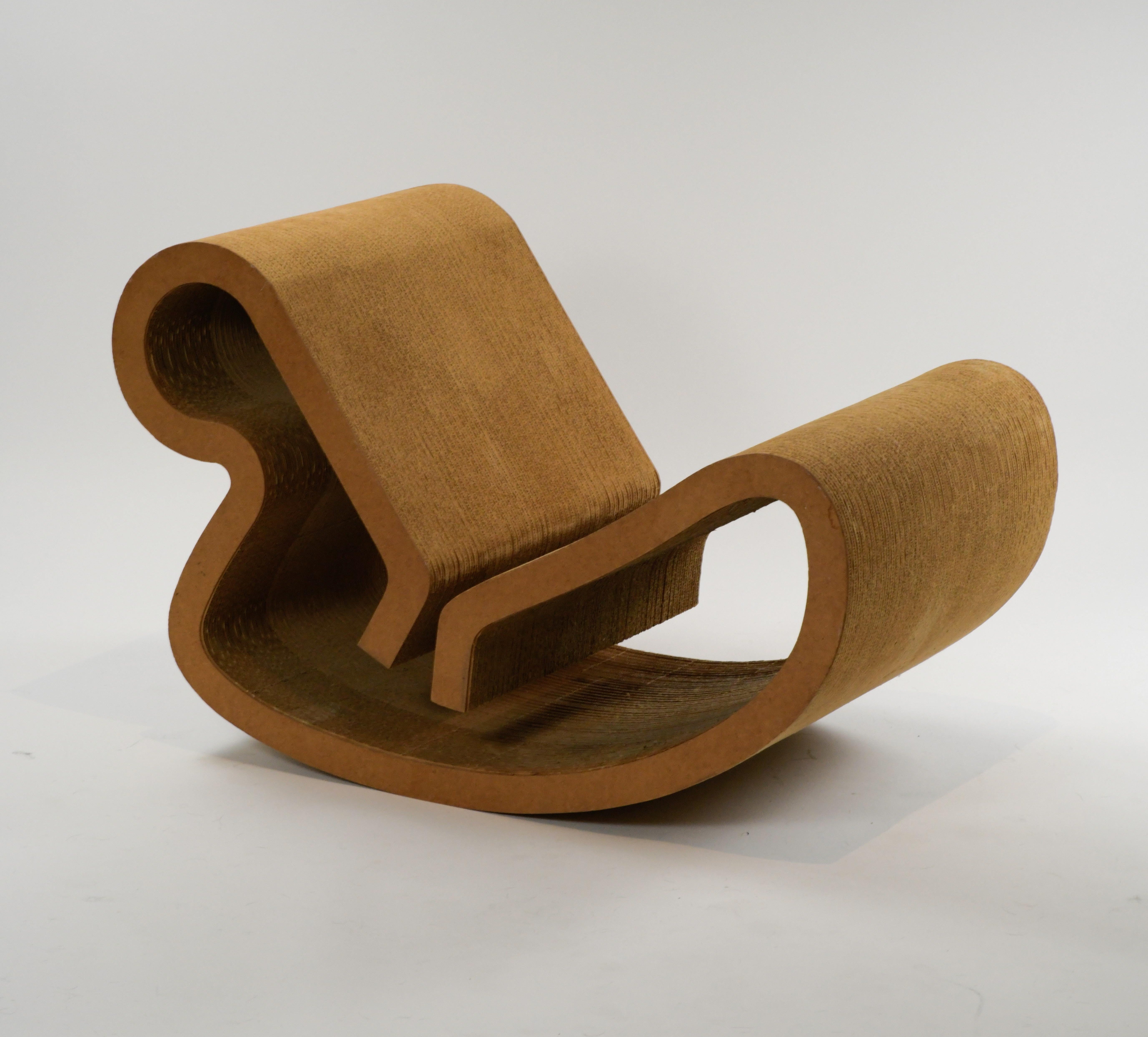
Upon seeing this device, I was struck by a series of observations roughly in this order.
I first noticed its accessible construction.
The Easy Edges rocking chair looks easy to build. The chair itself is simply glued laser-cut double-walled corrugated cardboard panels which alternate in their orientation (imagine that every other panel is rotated 90 degrees before being cut so the ‘squiggly’ edge points in different directions). That is all there is to this chair. Despite what you might have heard, none of the cardboard pieces by Gehry possess any internal reinforcement. The chair is simply cardboard, wood glue, and two layers of 1/8th hardboard on each end to protect the edges from denting.
Not only do I have access to double-walled cardboard, I have used a laser cutter before so I understand the triviality of this process.
I then noticed the chair’s precarious appearance.
There is no way such a cantilever could support the weight of most adults, right?? Across most of the chairs in Gehry’s Easy-Edges Series, each cardboard panel is only two inches wide. This feels quite unsubstantial for the various bending loads. This specific chair seems especially structurally impractical, but I doubt I will ever know how it structurally performs for sure as it isn’t sold anymore. Furthermore, I have yet to find any evidence that anyone actually used one as a permanent piece of furniture. This cannot be said about other pieces in the same series. Vitra still sells the Wiggle Chair and Stool, two pieces from the Easy Edge Series both with some sort of cantilever, which relies on the rigidity of cardboard to resist bending. I spoke with a representative at Vitra who told me that despite its appearance, these chairs are incredibly rigid (when dry).
I have a guess as to why he chose this thin two-inch thickness. The material is surprisingly strong naturally, so using a thinner width communicates and honors the intrinsic properties of the cardboard well. Any unnecessary thickness reduces the spectacle of such an interesting structural feat.
I then noticed its form.
The figure is quite friendly and strange. So strange, in fact, that I didn’t read this object as a chair when I first saw it. It looks more like a sculpture with chair-ish qualities. I only differentiate the seat from the backrest because the smaller loop near the top resembles a head. Without this, I worry the reading would be unclear.
The fluidity of the geometry is possible due to the construction process. Laser cutters can produce almost any precise two-dimensional figure effortlessly. Thus, there is much potential in this method of construction as means of formal and design exploration. Gehry shows this with the diversity of shapes in his whole Easy Edges Series. That being said, most laser cutting services charge based on the time spent cutting due to equipment wear. Therefore, Gehry was incentivized to eliminate any unnecessary curves or extensions. I feel that I can read this in the form of his rocking chair. The seat quickly transitions to the base of the rocker, which becomes the backrest with minimal ornament (besides the smaller curve which resembles a head). In the middle of the chair where the backrest and the seat approach, there are two cardboard posts that turn down towards the base, presumably to support the seat and backrest if the chair deforms too much.
Notice that Gehry also designed the chair as a straight extrusion, which means every single layer of cardboard is identical. This was done because designing each section individually could maybe produce a more comfortable seat, but would have been overly labor intensive and inaccessible as a commodity. Part of the efficiency of this chair is that a single shape could be designed and replicated until the chair reaches appropriate thickness.
I was always interested in furniture, but after coming across this piece, I felt inclined to produce a chair of the same technique. This opportunity felt like a way into a design field I have never felt comfortable participating in.
Design Process
I first asked myself if another chair were to be added to the Easy Edges Series, what chair would that be?
